Tooth Care for Horses

I’ve been thinking about teeth this week – horses’ teeth in particular. That’s partly because my own horses are due for a dental check up, but also because there’s been a report in one of my journals that really made me think how much dental work has moved on in the last ten or fifteen years!

When I was training as a vet, an equine “tooth check” mainly involved grabbing the tongue, having a quick feel round, then rasping away at anything that felt sharp. If you were properly equipped, you’d use a gag (aka a dental speculum); if not, many vets were happy to work around the horse’s tongue and teeth.

Nowadays, that sort of cursory examination really isn’t good enough in many cases. There are a lot of very well trained and experienced vets, as well as good equine dental technicians (EDTs) who would probably need a sit down if they saw some of the things that were commonplace not that long ago!…

Baldness in Dogs (Alopecia)

I’ve been seeing a number of bald dogs in the consulting room recently, and it made me wonder how common a problem it is – and how many conditions there are that can lead to a dog losing his hair!

Baldness (or alopecia, to give it its technical name) isn’t generally a disease in its own right – it is almost invariably a symptom of an underlying disease condition. So, when I’m faced with a poor, balding dog in the consult room, my first task is to try and define what the underlying cause is. With a symptom with so many possible causes, what we do to narrow down the possibilities is to work out a differential list – a list of all the possible conditions that can cause baldness – and then eliminate them until we come to the actual cause in this specific case.

So, in no particular order, here are the more common causes of hair loss in dogs, along with their other major signs or symptoms…..

‘I am NOT going in that box…’ – How To Successfully Get Your Cat To The Vet

Suddenly realise you’re late for your cat’s appointment at the vets. Run out to the garage and throw boxes around until you find cat basket. Scream as you remove spiders from cat basket. Look around the room for cat. No cat. Look upstairs for cat. No cat. Look in all closets for cat. No cat. Go back and look behind the sofa. Find cat. Move sofa, cat runs upstairs. Find cat under bed. Crawl under bed and grab cat by scruff and pull, dragging both cat and half of your carpet out from under the bed. Carry hissing and spitting cat downstairs to basket. Call for help as cat splays all four legs as wide as possible to avoid being put in basket. Finally get cat in basket. Drive howling cat to vet. Present cat, who has now vomited, urinated and defecated in the carrier, to the vet.

Sound familiar? I would bet that most cat owners have had a similar experience. And there’s nothing you can do about it, right? Cats hate carriers, cars, and vets and that’s just the way it is. But it doesn’t have to be that way! By following a few simple steps you can make the whole procedure much easier on both yourself and your cat.

New Years Petolutions!

Oh! A New Year’s resolution? That sounds fun! I can I do one? Can I, can I, please?! Right, OK, what should I try? How about slobbering less?! Could do but that would be VERY difficult and I think Mum would miss it, she always shouts with delight when I give her a big kiss, especially first thing in the morning when she hasn’t seen me for AGES! I love walks, what about going on more?! With Dad obviously, that time I tried it on my own wasn’t so successful. A lady caught me and I ended up at the VETS, yuk! But Dad soon came to collected me and said it was a good thing I was chips (I think!). I like chips, they let me eat the crunchy ones they don’t like. Anyway, yes, walks, I love them but wish I could go off the lead more (that’s why it was SO much fun when I went on my own!). Dad doesn’t let me much but I love to run. I know he gets a bit cross when I don’t come back straight away but it is so BRILLIANT to run, it’s what we dogs are made for! I suppose I would go back if he made things more interesting, like playing games or having some treats. Also, I am not very good at commands but then again we don’t practice them much and my doggy brain needs to be reminded otherwise I forget stuff.

Roses are Red, Violets are Blue, Lilies are Downright Dangerous

As far as plants go, lilies are among the most beautiful. They smell lovely and seem to last forever, making them a fantastic addition to any floral arrangement. Humans adore them and most animals aren’t bothered by them, but for cats, lilies are positively deadly. And it doesn’t take much. A single bite of leaf or lick of pollen can be all it takes to send a cat into irreversible kidney failure. As cat owners, we all need to be aware of how dangerous this common household plant can be, and take the necessary steps to keep our unsuspecting pets safe.

What makes lilies so toxic to cats?

• We don’t know exactly which chemical within the lily is so dangerous, but we do know that ingesting the smallest amount of leaf, stem, flower or even pollen can be deadly.
• Most types of lilies are poisonous, including asian lilies (Lily asiatica), tiger lilies (Lilium tigrinum), stargazer lilies (Lilium orientalis) and Easter lilies (Lilium longiflorum)….

What NOT to buy your pet for Christmas!

The nights have drawn in, Merry Hill is heaving and the carols have already been playing for weeks – it’s Christmas! If you are anything like me and leave everything to the last minute, you don’t have much time to plan the ideal gifts and sometimes you buy things that aren’t always that suitable. Now, I can’t tell you what not to buy for your Dad (although I’m guessing he doesn’t really want socks again) but I can tell you what not to buy for your pets!

It may be getting cold outside, but it’s always flea season at home…

I see it almost every day, and constantly warn my clients about it, yet somehow even I wasn’t expecting it – yes, last week my very own cat came home with fleas. ‘How could this happen to me?’ I said, ‘I’m the vet!’ Well, the answer is very simple. I, like many of us, forgot to apply my cat’s flea preventative for the past few months. The weather was getting colder and she wasn’t going out as much, and with everything else going on the monthly treatment just slipped my mind. It sure was a wakeup call, however, to find the tell-tale rusty brown dirt on my cat’s favourite bed. And let’s face it, fleas are downright creepy. They eat blood and leave their faeces all over your pet, not to mention the fact that they can live in your carpets and even jump up and bite you. But at the same time, they’re pretty amazing little creatures, and successful ones at that….

Dental problems in our pet – an entirely preventable problem!

Did you know; two thirds of dogs and cats over the age of 3 years old will have some dental problems
to some degree? It is an astonishing statistic and the numbers only get higher as the animals get older.
However, the good news is that with some simple home care techniques and veterinary treatment the
damage can be reversed or even prevented from happening in the first place.

Dental problems in pets will vary in severity from a mild plaque and tartar staining to marked tartar
build-up, gingivitis, bacterial infections, rotten tooth roots. Not only are these unsightly and a prime
cause of ‘doggy breath’ they are also very painful and can be damaging to the body

Remember, remember……..it’s time to plan for fireworks night 2012. Cats and dogs that are scared of fireworks.

Fireworks can be an enjoyable spectacle, but not for everybody. Many dogs and cats are very frightened by loud noises, and in some this fear is severe enough to be a noise phobia. For these pets and their owners, the days or weeks around November 5th each year can be a nightmare.

The sorts of behaviour shown by noise phobic pets when they hear fireworks (or thunder or gunshots) can range from mild anxiety to sheer terror. In between these two extremes pets may pace around, refuse to settle, whine, bark, chew things up, dig holes, urinate or defaecate indoors or run away. A pet which bolts when frightened is at risk of having or causing a road accident. As owners, naturally we all want to reduce the distress our pets are feeling.

There is a lot that can be done to help pets through these problems, and the key to this is to plan as early as possible. Seek advice from your local veterinary surgery, where your vet or nurse will be able to help you decide on the best strategy for your pet.

What Your Rabbit Really Needs

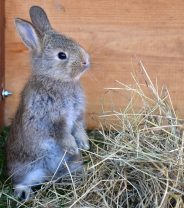
Rabbits are really popular pets in the UK, second only to cats and dogs, and they can make great companions. However, despite peoples best efforts their needs are often misunderstood and rather than being treated as the intelligent, social animal they are, many are condemned to a life of loneliness and boredom in a cage at the bottom of the garden. It is not difficult to look after rabbits in a way that will keep them both healthy and happy, so what do they really need?

The most important thing you can do to keep a rabbit healthy is feed them a balanced diet. The most common problems that vets see in rabbits are over-grown teeth, tummy upsets and obesity related disease, all of which are directly related to them being fed incorrectly. The vast majority of a rabbit’s diet, at least 80%, should be good quality hay. As a rough guide, every day a rabbit should eat a pile of hay as big as it is. Rabbit’s teeth grow continually and without hay to grind them down, they can develop painful spikes, which rip into the tissues of the mouth, and nasty abscesses in the roots. Hay is also required for good digestion (rabbits can easily die from upset tummies) and helps prevent them getting fat. In addition to hay rabbits should have a small amount of fresh vegetables every day, half a handful is enough and a small amount of pelleted rabbit food, no more than a tablespoon twice a day. This is often where people go wrong, leaving the rabbit with an over-flowing bowl of rabbit food, which, because it is high in calories and very tasty, it is all they eat, giving them a very unbalanced diet.

More Useful Information

Examining your pet

Simple ways to check the health of your pet. Vets use these techniques as part of their clinical examiniation.

Medicating your pet

Arming you with the same simple techniques for stress free pill giving.

Worming & Flea Treatment

Information and advice in treating your pet for worms and fleas.