Ask our Online Vet – My cat has white spots on her bottom, is licking her bum alot and pooing outside her box

Question from Shellie Masters

My cat seems to have white spots on her bottom and is licking her bum alot more than usual, also she is pooing outside of her box, any ideas? She is about 11 years old. Thanks

Answer from Shanika our Online Vet

Hi Shellie,

Thanks for your question regarding your cat licking her bottom more, white spots that you have noticed on her bottom and the change to her toileting habits.

All the points that you have mentioned can be individual issues or linked as will hopefully become clear as I go into answering your question.

What are the white spots on my cat’s bottom?

The exact location of the spots will help us to work out what the spots are, the bottom itself is made up of skin which has one large opening through which the poo is passed and then two smaller openings( at 10 o’clock and 2 o’clock positions) which are where the anal sacs open via their ducts ( tube). Anal sacs are lined by glands which produce a rather smelly substance that is normally passed in small amounts every time your pet does a poo, this anal sac liquid forms part of the scent that shows cats who has been around the territory. Anal sacs can get blocked or infected, this can sometimes appear as white spots on the bottom and also lead to increased licking due to the resulting irritation.

Your vet can empty the anal sacs by applying gentle pressure which may relieve the problem, if there is infection antibiotic treatment may be needed.

Tape worm segments are another possibility for the presence of white spots around a cats bottom, tape worms are a parasite that live inside the gut and release small segments as part of their means of spreading. These small segments of tape worm when dry can appear like a small grain of white rice, when fresh they look more like a small piece of flattened pasta ( can be seen to move when looked at closely).

Tape worms and other parasites can be treated using appropriate medication form your vet.

Parasitic infections can cause irritation around the bottom which can lead to increased cleaning/licking. A less obvious cause for such licking is flea allergic dermatitis (FAD). FAD can often be seen as increased grooming and areas of hair loss along the back and inside of the hind legs.

Polyps and or growths on or around the bottom can appear as white spots and may also lead to increased licking of the affected area.

What other reasons may be causing my cat to lick its bottom and poo outside of its litter box?

Changes to the poo itself either softer or harder than usual can cause irritation and increased licking along with toileting outside of the litter box. Loose or soft faeces may be related to diet changes, stress and or internal disease of organs and or the gut itself……….

Does your vets deserve to win our Best UK Vets 2013 award?

If so you can help…

What is the Best UK Vets 2013 award?

It’s a new award judged by us – VetHelpDirect.com – to find the best veterinary practice in the UK based entirely on reviews made by their clients (you!). We like to think of it as a pet-owner’s-choice-award and, as pet owners are the most important thing to vets, this award has created a lot of interest already!

We are holding the award presentation shortly after we announce the winning practice (on the 28th January) and every client that has left a review will be invited to celebrate!

How can I help them win?

The winning vet practice can be any of the practices listed in our directory. If you’re not sure if your is, just follow this link and pop in your postcode: www.vethelpdirect.com/practices If your vet comes up in the search results then follow these steps:
1. Click on your vet’s listing.
2. You’ll see a box on the right, just underneath their map, called ‘Overall Rating’, click on the link that says ‘Review this vet – click here’.
3. Tell your vet what you think about them and give them a star rating out of five.
4. Submit your review…and that’s it!

The award will be given to the practice (or branch) with the highest number based on this formula: Number of Reviews x Average Star Rating.

When will the winner be announced?

You don’t have long! We are only counting reviews left before Monday 28th and announcing the winner the same day. The presentation will take place soon after the 28th.

What if they don’t win?

There is a lot of competition for this award but, if your vets doesn’t win it, there is a great commiseration prize – all the lovely reviews from their clients!

Online Reviews

Our online review service is intended to give a fair reflection of veterinary practices across the UK. Therefore if you wish to leave a negative review, they can be left in the same way as above. All reviews are read by a member of the VetHelpDirect.com team and defamatory comments will not be published online, but your star rating always will be.

Ask a vet online – “What can cause staining around mouth and on dogs paws?….”

Question from Ann Hutton

What can cause staining around mouth and on dogs paws? No change in diet and its come on in just a few weeks? Cavalier male aged 9.

Answer from Shanika Online Vet

Hi Ann,

Thanks for your interesting question about the recent staining you have noticed around your dog’s mouth and paws.

The staining you are referring to is most likely caused by a substance called Porphyrin. Porphyrin is a naturally occurring substance in the tears and saliva and tends to show up as a pink/brown colour where your pet has licked, dribbled or produced lots of tears. The discolouration from the Porphyrin is most obvious on light coloured fur.

The staining of the fur itself is of no actual harm to your pet however it is important to get to the bottom of why it is happening and I would definitely advise that you discuss this further with your vet.

There are many possible causes for the staining you have noticed which include: dental disease, other conditions of the mouth, allergies and stress……………

May I Make A Suggestion?

Happy New Year! Have you made any resolutions yet? If not, may I make a few suggestions? There are some phrases I hear often in my clinics which I would really rather never hear again (although I’m going to!) and I thought I would share them with you so you know why they irk me and you can make a resolution never to say them!

He’s limping but he’s not in any pain

This one is my biggest bugbear in practice. If clients say this to me I smile politely but really I want to say ‘Well why else would he be lame?!’. The problem is that our pets don’t display pain as we do and will continue to act fairly normally even if they are very sore. This is why you can feel all over the lame leg and they will rarely even wince. In fact, it is often only when they break something that even us vets can find any discomfort, our pets are much braver than us! If any animal is lame, they are sore; whether it is a cat who has been scrapping and developed an abscess or an elderly dog who has been stiffening up for while, and must be brought to the vet (and don’t tell us the problem isn’t pain!)

But she hardly eats anything…..

No, in comparison to you, a person probably 10 times her size she doesn’t but for a little animal she must, otherwise she wouldn’t have a head that looks several size to small for her body! (Another statement I would like to say but have to dress it up in a slightly more polite way!) Small dogs and cats only need small amounts of food to keep them going, often only 50-100g of dry food a day, which can look measly in a food bowl. Also, often they are not particularly food orientated and soon learn that if they leave the biscuits in the bowl (which isn’t a hardship because they aren’t hungry anyway), it will soon be replaced with something much tastier from the fridge (sound familiar?!). The best thing to do is to pick a good quality dry food that you know provides all the nutrition they need, ensure they eat a measured amount every day and stop worrying about them!

Oh, he never goes off the lead

I know it can be difficult to give a dog decent off the lead exercise but it is vital. All dogs can be taught reasonable recall and good dog to dog behaviour but for some it is more challenging than others. Don’t resign yourself to never being able to let your dog run, it is no fun walking a dog who is exploding with energy and often they are quite badly behaved because they are so frustrated, get some professional advice. It can seem embarrassing to have to ask for help for something which many dog owners take for granted but a bit of time and investment can make a huge difference to you and your pets and mean walking them is a pleasure, not a chore.

But she’s so old now, is it worth it?

How would you feel if someone refused treatment for you for a painful or debilitating condition just because you were old? Would you be pleased you weren’t ‘going to be messed with’ or would you prefer to undergo a procedure that would allow you to live a much more comfortable life for the time you have left? Exactly, so why is it any different with our pets?

One of the most common problem I see in elderly animals is dental disease. Not only is it very painful but the infections in the tooth roots can be very damaging to other organs. Unfortunately, they aren’t good at showing they are sore and they are left to suffer in silence. Their quality of life can be massively improved by surgery but it can be difficult to persuade their owners to go ahead. Other diseases which can be very effectively controlled include Kidney Failure, Arthritisand Diabetes, all with very little intervention. Our older pets have given us years of companionship and loyalty, the least we can do is keep them comfortable and pain free.

This is just a small selection of the things clients say to be that make me roll my eyes, (others include ‘He doesn’t eat dog food’, ‘She’s not fat, she’s just big boned’, ‘Oh, you can’t touch his face/ears/paws, he doesn’t like it’) I am sure all professions have their versions (and I have probably said them!) but there is an important message here which I hope you understand! I hope you and your families all have a happy 2013!

Sedatives and Sedation in Horses

We routinely sedate horses in practice – after vaccination, it’s probably the most common “routine” job that we do. So, what are we doing? How do the drugs work – and why doesn’t it always happen the same way?

“Sedation – a state of rest or sleep… produced by a sedative drug.”

That’s the dictionary definition, and it makes it sound lovely and simple – give a drug, and the patient goes to sleep. Of course, in reality (as usual with anything equine!) life isn’t that easy…

For those who haven’t seen it before, a sedated horse doesn’t lie down, but their head gets lower and lower, and they may require something to lean on to help them balance. It’s also important to remember that a sedated horse CAN still kick – they’re just much less likely to do so! It often seems that the horse is still more or less aware of what’s going on around them, but they’re too sleepy to care about it. As a result, we’d almost invariably use pain relief and local anaesthetic as well if we’re carrying out a surgical procedure.

There are a wide range of situations in which we like to use sedation. Generally, it’s to make the horse more amenable when something nasty or scary is being done to them. Of course, this varies from horse to horse. There are quite a lot of horses out there that need a sedative before the farrier can trim their feet; and there are others that will allow you to suture up a wound without sedation or even local anaesthetic (not recommended, but occasionally necessary)……

Ask a Vet Online – “My dog gets frontline flee treatment ..”

Question from Tracey Newall

My dog dexter gets frontline flee treatment but recently he seems 2 scratch more i havent found anything but his skin flakey

Answer from Shanika Online Vet

It is good to hear that you are treating Dexter for fleas; fleas are definitely high up on the list of causes for an itchy dog. Dry flaky skin may well be as a result of scratching due to flea infestation but can also be affected by allergies and medical conditions.

It is really important to remember that a pet suffering from a flea allergy or irritation does not need to be full of fleas. All it takes is one flea to bite your pet to set off the allergic reaction cascade that leads to the skin being irritated.

What is a flea?

Ctenocephalides canis or felis (the dog and cat flea) are a small wingless parasitic insect that live on our pets and in the environment. Fleas can jump but they can’t fly, they need blood feeds to survive and a large proportion of the flea population are in the environment as oppose to on your pet.

Where are the fleas coming from?

Fleas live on animals as well as in the environment. The flea population consists of adult fleas, immature larval stages, dormant pupae and then eggs, as you move down the list the numbers increase significantly which is why we refer to them as a pyramid.

Fleas in the environment, by this we mean anywhere a pet with fleas has been, the warmth of our homes provides a great breeding ground for fleas in carpets, pet bedding and just about any nook and cranny.

Cats can also carry the fleas and they do not even have to be your own cats, for example if a cat comes through your home or garden then the fleas can jump off or deposit eggs as they go. This is why we often advise treating the home environment and in-contact animals also.

So how can you tell if your pet has fleas?

Gently part your pets fur and search through close to the skin, fleas are a reddish/brown colour and quickly move away from the light. It can be easier to find fleas on the underside of your pet as the coat is naturally thinner here. It is often easier to see the flea dirt in your pet’s coat than the actual fleas.

So what is flea dirt and how can you tell if there is any on your pet?

Flea dirt is the waste product produced by fleas and when dry it looks like little black specs, however if you wet it these black specs turn red as they contain digested blood. This brings us to the ‘wet paper test’, we comb through your pets coat and collect the debris onto a piece of wet white paper, if there is flea dirt present there will be small red dots visible where the flea dirt has dissolved in the water. The wet paper test helps to distinguish between flea dirt and just dried mud that may be on your pet’s coat.

Can the fleas live on humans?…………………….

Rain Scald, Mud Fever and Greasy Heels – Wet Weather Care for Horses

I heard on the news recently that this year has been one of the wettest on record. I don’t know if it’s true – but it certainly feels about right! The big danger to our horses from this, of course, is Rain Scald and Mud Fever.

Most people have probably come across Rain Scald on occasions – the scabs hidden away in the coat feel like mud, until you pull them up and see the characteristic “paint brush” appearance as the hair stays stuck in the scab. Rain Scald is caused by a bacterium called Dermatophilus congolensis. This usually lives (fairly) harmlessly on the skin, but if the skin gets and stays wet, the bacteria can invade and set up an infection.

Most cases are mild, with just a few scabs here and there, but (especially in older horses and those with Cushing’s disease) it can be more general and leave large raw patches. Even a mild case can put a horse “off games” if the scabs or raw patches are under the saddle.

Most cases resolve on their own with simple care – gently brush out the scabs, and most importantly keep the area dry to allow it to heal. That said, older horses and those with other diseases may need a helping hand, in which case a short course of antibiotics from your vet will usually clear it up. HOWEVER… Unless the underlying problem is sorted, it will rapidly return! Prevention is far more important, and that means keeping the skin as dry as possible. Remember, if your horse gets wet, that’s fine as long as he can then dry out thoroughly. It’s if the skin stays constantly wet that problems ensue – and watch out for rugs, especially in early autumn! When it’s wet, but not that cold, horses can easily sweat up under their rugs, and sweat seems to be even worse than rain for causing Rain Scald.

The other thing to watch out for, of course, is Mud Fever. This is an infection of the skin behind the heels (its sometimes called Greasy Heels), and is most common in horses with long feathers. It’s a far more complicated disease than rain scald, and has a large number of contributary causes. The most important is wet weather, of course – as the skin gets wet, bacteria can invade, as in rain scald – long feathers keep the water trapped in the area, slowing down the drying, so cobs and heavy horses are more prone. However, mites are also a known cause (the first signs are usually stamping of the hind legs), and its not just bacteria, because some cases include yeasts and other fungi as well. Sometimes, really aggressive bacteria like Pseudomonas can establish themselves, and they can be really difficult to manage………….

Help! My dog is out of control in the countryside!

My dog Spot is a reasonably obedient terrier, never moving more than twenty yards away from me when out on walks in the countryside. I keep an eye out for potential hazards, such as people on horseback or groups of people with dogs, and when I call him, he reliably comes straight back to me, as long as he’s not distracted by something unusual.
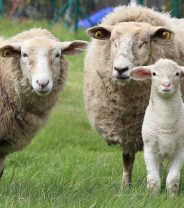
On this occasion, I was engrossed in a conversation with a friend, and I didn’t notice Spot’s ears perk up as we moved along the path. It was only when I saw the sheep ahead of us that I recognised the hazard, and by then it was almost too late: Spot had them firmly in his sights, and he had started trotting towards them. A bellow from me, and he stopped, thought twice about it, then came back to me. But it could have gone badly wrong.
Many of you will have seen the infamous Youtube video of “Fenton” from last year: the large black dog had charged off in full chase of deer in London’s Richmond Park, with his owner running after him, shouting his name in vain. The video made many people laugh, perhaps sometimes because they had suffered a similar distressing experience themselves, with an out-of-control dog ignoring all pleas from his or her owner. In reality, it’s a frighteningly serious situation: sheep can be physically injured or killed by marauding dogs, and as a reaction, dogs can be legally shot dead by furious farmers.
Walking the dog in the British countryside can be one of life’s great pleasures, but there are responsibilities that cannot be forgotten. Dogs need to be kept under close control to ensure they do not worry livestock or stray onto neighbouring land. It is a criminal offence to allow a dog to chase or attack livestock on agricultural land and the dog only needs to be in a field with sheep to legally constitute an offence of worrying. By law, farmers are permitted to destroy a dog that injures or worries their animals: prevention is the key to ensure that both dogs and sheep remain safe.
The following tips, courtesy of Dogs Trust, should be printed out and stuck on the back of the door beside the dog leashes, to be read before every dog walk in the countryside………..

Think before you throw… The trauma of canine stick injuries…..

Who “wood” have thought that playing with a simple tree branch or stick could result in such life threatening injuries?

With such a vast selection of toys available today for our canine companions it is a wonder why the simple tree branch / stick is still so widely used as an interactive “toy” for dogs to chase , catch and retrieve. Often so freely available after a windy winters day the selection of the most suitable stick can be so tempting, often dogs will help themselves with an overzealous approach attempting to carry a tree branch much larger than their own body length or owners simply pick up a small stick that would be much easier to throw, fly through the air further and with the added advantage to float in water too!

But do you ever stop and think of the implications of throwing a stick? And the serious life threatening injuries that can result?

Dogs are natural athletes often with a desire to do everything with such speed and with an abundance of enthusiasm during play. Mid-air acrobatics during stick catching is often considered part of the “fun” but severe trauma can result ; I have even nursed a dog that have caught the stick and then ran into a tree resulting in a cervical fracture in the neck!

The hidden “minor” injuries that occur through playing with sticks can often go unnoticed for a period of days, often lacerations occur under the tongue, in the laryngeal area, or stick fragments become lodged in the roof of the mouth which cannot be seen. Often symptoms of excessive salivation and reduction of appetite might be the only indication of oral damage……

Equine Education (Part 2 – Vet Students)

Have you ever wondered who the young person trailing behind your vet is? They appear, at best they’re introduced as “so-and-so, who’s seeing practice with us”, and then they disappear, never to be seen again…

Well, the odds are they’re vet students who are “seeing practice” with your vet.

Training as a vet is a long process – vet students spend 5 or 6 years at university doing lectures, practicals and clinical work. However, in that space of time, they also have to do the equivalent of an extra year of “EMS” (Extra-Mural Studies, generally known as “seeing practice”). This is their chance to get out of the lecture theatre, away from the ivory towers and out into the real world of practice!

As vets in practice, our job is to take these students and teach them the nuts and bolts of veterinary practice. They’ll learn the science, and all the theory, at vet school; however, there is also an art to veterinary practice, and that’s our responsibility. For example, if the client can’t afford the best treatment, how do you proceed? Or if a client refuses consent for a surgical procedure, what other options can be explored?

At the vet schools, students tend to learn a lot about the more esoteric and uncommon diseases, operations and procedures – this is because they operate referral hospitals (although Nottingham uses an expanded version of the EMS system for virtually all their clinical tuition). Although they do have first opinion practices, in all seven schools the teaching tends to be biased towards the rare and exotic. Out in general practice, however, the axiom “Common things are common” applies – for every septic pedal joint, there are dozens of simple hoof abscesses!…………………..

More Useful Information

Examining your pet

Simple ways to check the health of your pet. Vets use these techniques as part of their clinical examiniation.

Medicating your pet

Arming you with the same simple techniques for stress free pill giving.

Worming & Flea Treatment

Information and advice in treating your pet for worms and fleas.